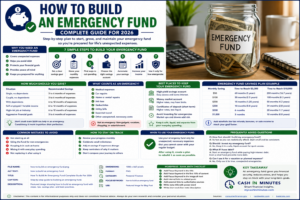

What is an emergency fund? An emergency fund is money you set aside specifically for unexpected and necessary expenses. It can help cover costs such as an urgent home repair, medical bill, loss of income, or unexpected auto expense without immediately relying on a credit card or new debt.
Building emergency savings can provide an important financial cushion when something does not go according to plan. Even a relatively small emergency fund can help you handle unexpected expenses while protecting your regular monthly budget.
Below, we’ll explain what an emergency fund is, how much you may want to save, where to keep the money, when to use it, and how to create an emergency fund step by step.
¿Qué es un fondo de emergencia?
An emergency fund is a dedicated amount of savings reserved for expenses that are both important and unexpected. Unlike money saved for vacations, entertainment, or planned purchases, emergency savings should generally be available when an unforeseen financial problem occurs.
The purpose is simple: give yourself access to money when you need it without disrupting your normal budget more than necessary.
¿Cuál es el objetivo de un fondo de emergencia?
If you’re wondering what is the goal of an emergency fund, the primary goal is to create a financial buffer between an unexpected expense and your everyday finances.
An emergency fund may help you:
- Avoid immediately relying on credit cards
- Cover essential unexpected expenses
- Continue paying bills during a temporary loss of income
- Reduce financial stress
- Avoid withdrawing money from long-term investments
- Maintain greater control over your monthly budget
Why Is an Emergency Fund Important?
Unexpected expenses can occur at any time. Your vehicle may need an urgent repair, an appliance can stop working, or your income could temporarily change.
Without emergency savings, even a relatively small expense can put pressure on your monthly budget.
Having money specifically reserved for emergencies gives you another option when unexpected costs arise.
How Much Should I Have in an Emergency Fund?
How much should I have in an emergency fund? There is no single amount that works for everyone. Your target depends on your monthly expenses, income stability, household size, and financial obligations.
A common long-term goal is to work toward enough savings to cover several months of essential expenses. However, you do not need to reach that goal immediately.
You can build your fund gradually:
- First goal: $500
- Next goal: $1,000
- Then: One month of essential expenses
- Longer-term: Several months of essential expenses
The right target is one that reflects your actual financial situation.
How to Calculate Your Emergency Fund
Start by calculating your essential monthly expenses.
These may include:
- Housing
- Utilities
- Groceries
- Transportation
- Insurance
- Minimum debt payments
- Necessary medical expenses
- Other essential household costs
For example, if your essential expenses total $2,500 per month, three months would equal $7,500.
You don’t need to save the entire amount immediately. Use it as a target and build toward it over time.
How to Create an Emergency Fund
Learning how to create an emergency fund is easier when you break the process into manageable steps.
1. Choose Your Initial Savings Goal
Start with an achievable target. For some households, reaching the first $500 or $1,000 can provide a useful financial cushion while working toward a larger goal.
2. Create a Separate Savings Account
Keeping emergency money separate from everyday spending can make it less tempting to use for non-emergencies.
3. Automate Your Savings
Consider scheduling an automatic transfer every payday or every month.
Even $25 or $50 transferred consistently can accumulate over time.
4. Use Extra Income Strategically
You may be able to grow your emergency fund faster by directing some unexpected income toward savings.
Lista de ejemplos
- Tax refunds
- Work bonuses
- Overtime income
- Cash gifts
- Money from selling unused belongings
5. Review Unnecessary Expenses
Look at your monthly spending for expenses you can temporarily reduce. Redirecting even a small amount each month can help you build an emergency fund faster.
6. Increase Contributions When Possible
As your income changes or other debts are paid off, consider increasing the amount you automatically save.
7. Replenish the Fund After Using It
Using emergency savings for a legitimate emergency is exactly why the money exists. Afterward, gradually rebuild the account so it is available for the next unexpected expense.
Where to Keep an Emergency Fund
Where to keep an emergency fund is almost as important as how much you save.
The money should generally be accessible when needed while remaining separate from everyday spending.
Common options include:
- Savings accounts
- High-yield savings accounts
- Money market deposit accounts
When comparing accounts, consider accessibility, fees, minimum balance requirements, interest rates, and applicable deposit insurance.
When Should You Use an Emergency Fund?
An emergency fund should generally be reserved for expenses that are necessary, unexpected, and difficult to postpone.
Before using the money, ask yourself:
- Is this expense unexpected?
- Is it necessary?
- Does it need to be handled now?
If the answer to all three is yes, using emergency savings may be appropriate.
Emergency Fund Examples
Examples of situations where emergency savings may be useful include:
- Unexpected auto repairs needed for transportation
- Emergency home repairs
- Temporary loss of income
- Necessary medical or dental expenses
- Unexpected travel caused by a family emergency
- Replacing an essential household appliance
What Should You Not Use an Emergency Fund For?
Not every unexpected purchase is an emergency. Ideally, emergency savings should not routinely pay for:
- Vacaciones
- Entertainment
- Holiday gifts
- Routine shopping
- Planned vehicle maintenance
- Nonessential upgrades
These expenses are better handled through separate savings categories when possible.
Emergency Fund vs. Regular Savings
Although both involve saving money, they serve different purposes.
| Emergency Fund | Regular Savings |
|---|---|
| Unexpected essential expenses | Planned purchases and goals |
| Should remain accessible | Accessibility depends on the goal |
| Used only when necessary | Used for planned spending |
| Replenished after use | May be spent once a goal is reached |
Should You Build an Emergency Fund or Pay Off Debt?
This depends on your individual circumstances. Having some emergency savings can prevent a small unexpected expense from immediately creating additional debt.
At the same time, high-interest debt can be expensive to carry.
Some people choose to establish a smaller starter emergency fund while continuing to make required debt payments, then increase savings as their financial situation improves.
If you’re currently repaying a personal loan, read our guide on how to pay off a personal loan faster.
How Long Does It Take to Build an Emergency Fund?
The timeline depends on your savings goal and how much you can contribute each month.
For example, saving $100 per month would create:
- $500 in approximately 5 months
- $1,000 in approximately 10 months
- $2,000 in approximately 20 months
The important part is consistency. A smaller amount saved regularly can still build meaningful emergency savings over time.
Frequently Asked Questions
What is an emergency fund used for?
An emergency fund is designed to cover necessary and unexpected expenses such as urgent repairs, temporary income loss, or other essential costs that were not part of your regular budget.
Is $1,000 enough for an emergency fund?
$1,000 can be a useful initial goal, but the appropriate amount depends on your expenses and circumstances. Many people continue building beyond their first $1,000.
Should an emergency fund be kept in cash?
Keeping a small amount of physical cash may be useful in certain situations, but storing an entire emergency fund as cash can introduce security risks. An accessible deposit account is another option to consider.
Can I invest my emergency fund?
Emergency savings are generally intended to be readily available. Investments can fluctuate in value and may not provide immediate access under all circumstances, so consider liquidity and risk carefully.
How often should I add money to my emergency fund?
Regular contributions can make building the fund easier. Many people choose to contribute every payday or once per month.
Final Answer: What Is an Emergency Fund?
So, what is an emergency fund? It is money specifically reserved for unexpected and necessary expenses. Its purpose is to give you a financial cushion when something unexpected affects your normal budget.
Start with an achievable savings goal, contribute consistently, keep the money accessible, and replenish the fund whenever you need to use it.
For more financial education, explore the Cash In Minutes financial blog or learn about our personal loan options in Utah.
You can also find information about emergency savings and consumer finances through the Consumer Financial Protection Bureau.